Bone Grafting and Sinus Lifts for Dental Implants in Colombia
Being told you don't have enough bone for dental implants doesn't necessarily mean you're not a candidate. In many cases, bone grafting can help create the support needed for implant placement.
At Dental Tourism Colombia, most patients who need bone grafting can have the graft, protective membrane, dental implant, and temporary crown placed during the same trip, when clinically appropriate. Patients with more extensive bone loss may need a separate grafting procedure and additional healing time before implants can be placed.
Sinus lifts are less common and require special consideration for international patients because of the recovery period and restrictions on flying.
Here's how these procedures work, when they may be necessary, and what they mean for your dental implant treatment in Colombia.
When Is Bone Grafting Necessary for Dental Implants?
Dental implants need sufficient healthy bone to provide support and stability. When a tooth has been missing for a long time, the surrounding jawbone may gradually shrink because it is no longer receiving the stimulation associated with a natural tooth.
Bone loss can also result from periodontal disease, infection, trauma, or other dental conditions.
If there isn't enough bone to support an implant in the desired position, your dentist may recommend a bone graft.
Bone grafting involves placing graft material in an area where additional bone support is needed. Over time, the grafted area heals and can help create a more suitable foundation for implant placement.
However, not everyone with bone loss needs a graft. The decision depends on the amount and location of available bone, the planned restoration, and the dentist's assessment.
For an overview of implant options and treatment planning, visit our dental implants in Colombia guide.
Can Bone Grafting and Dental Implants Be Done at the Same Time?
Yes. In many cases, bone grafting and implant placement can be performed during the same procedure.
This is the approach our dentists use for most patients who require grafting, provided there is enough existing bone to support the implant securely.
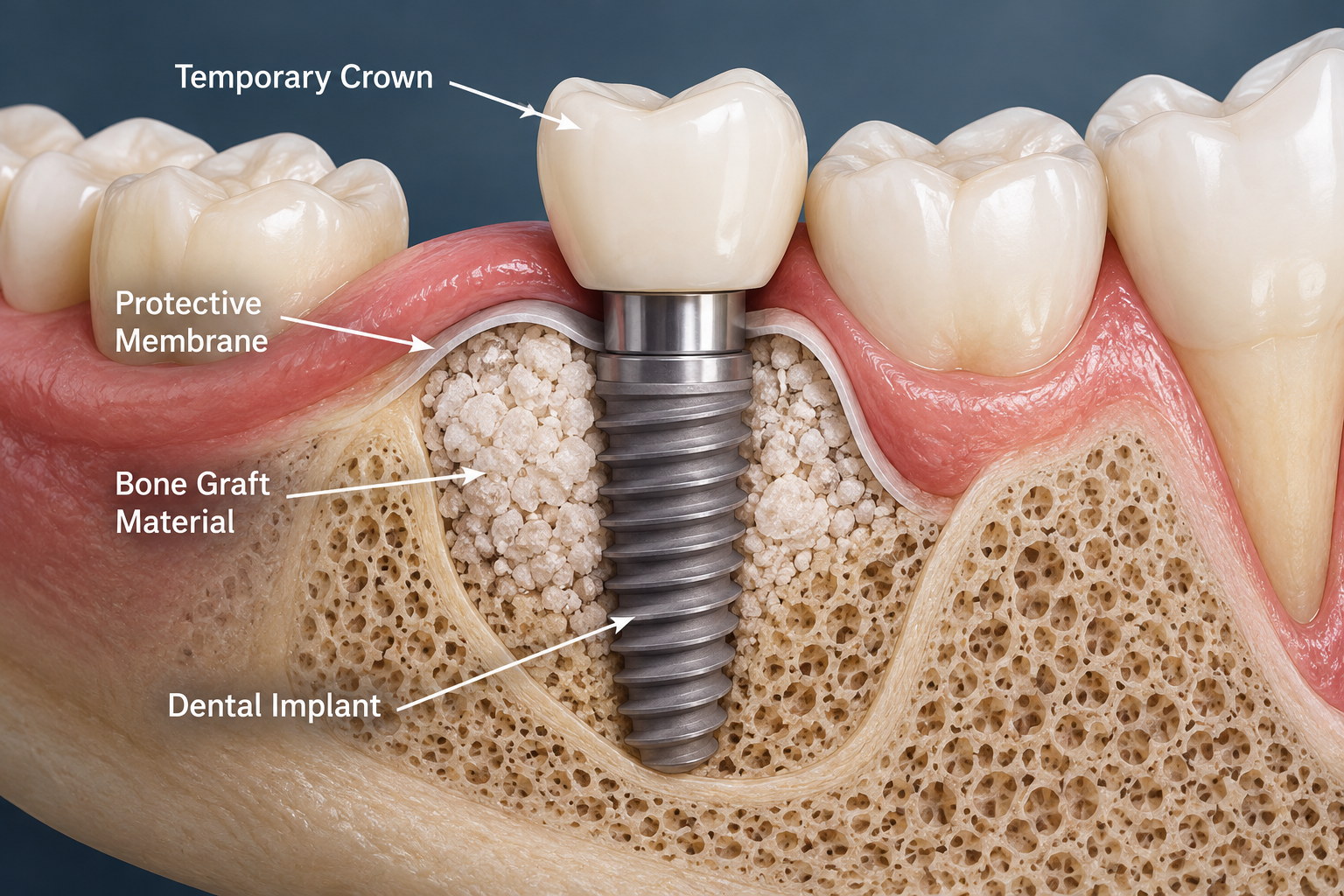
Depending on the case, the dentist may place:
Bone graft material to address the area of insufficient bone.
A protective membrane over the grafted area.
The dental implant.
A temporary crown, when appropriate.
Completing these steps during the same trip can simplify treatment planning for international patients.
However, the implant must have adequate initial stability, and the surrounding tissues must be suitable for the procedure. A temporary crown is not appropriate in every case, and any temporary restoration may need to be kept out of heavy biting contact during healing.
When Does Bone Grafting Require a Separate Procedure?
Patients with more extensive bone loss may need bone grafting before implants can be placed.
For example, someone planning a full-mouth restoration with All-on-6 implants in the upper jaw and All-on-4 implants in the lower jaw may require extensive grafting if there isn't enough bone to support the planned implants.
In these situations, the first trip to Colombia may be dedicated to bone grafting.
The grafted area typically needs approximately 4–6 months to heal before the dentist can reassess the bone and proceed with implant placement. The exact timing depends on the extent of the graft, healing, and clinical findings.
This can add an entire trip to the usual dental implant treatment schedule.
How Does Bone Grafting Affect Travel to Colombia?
For international patients, the biggest difference is whether the graft can be performed during implant placement or must be completed beforehand.
If grafting and implant placement can be combined, patients may be able to follow their planned implant travel schedule without adding another visit solely for grafting.
If extensive grafting is required first, the treatment process may look like this:
First trip: Bone grafting and any necessary associated procedures.
Healing period: Approximately 4–6 months while the grafted area heals.
Second trip: Implant placement, if the dentist confirms sufficient bone and healing.
Final restoration: After the implants have integrated, a subsequent visit may be needed to place the final crowns or prosthesis.
This means a complex case can require three trips rather than the two commonly associated with staged implant treatment.
The number of trips cannot be confirmed until the dentist reviews the patient's imaging and develops a treatment plan.
Not Sure If You Need Bone Grafting?
Share your dental photos, X-rays, or existing treatment plan. Our team can help you understand your implant options, whether additional procedures may be needed, and how treatment could affect your travel schedule.
What Is a Sinus Lift?
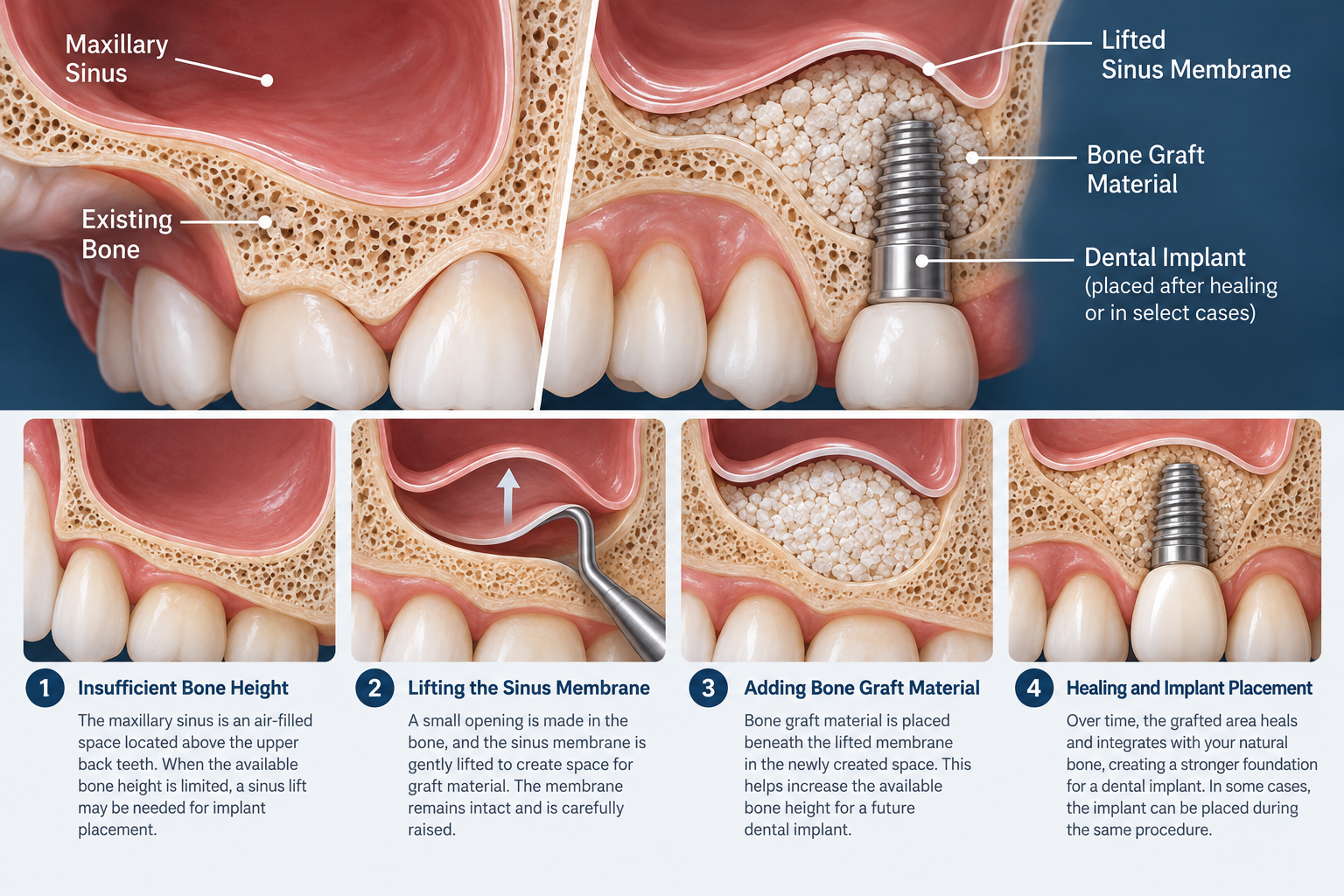
A sinus lift, also called sinus augmentation, is a surgical procedure used to increase the amount of bone available in certain areas of the upper jaw.
The maxillary sinuses are air-filled spaces located above the upper back teeth. When bone height is insufficient in this area, placing dental implants may require lifting the sinus membrane and adding graft material beneath it.
Not every patient who needs an upper molar implant requires a sinus lift. The decision depends on the available bone, sinus anatomy, and implant treatment plan.
Who Performs Sinus Lifts at Dental Tourism Colombia?
Our dentists perform bone grafting procedures, while sinus lifts are handled by a specialist.
Sinus lifts are relatively uncommon among our international patients. In nearly 10 years, Dental Tourism Colombia has coordinated only a handful of these procedures.
One reason is the additional recovery and travel planning involved, which can make treatment abroad impractical for patients who cannot remain in Colombia for an extended period.
Can You Fly After a Sinus Lift?
Flying after a sinus lift requires special consideration because changes in air pressure may affect the healing sinus area.
Dental Tourism Colombia's current guidance is to allow approximately three weeks of healing after a sinus lift before flying, subject to the treating specialist's assessment and clearance.
This is our treatment-planning guidance, not a universal rule for every sinus lift procedure.
For patients traveling from the United States, Canada, or elsewhere, an extended stay can be a major obstacle. Some patients may have the flexibility to work remotely, take an extended leave, or remain in Colombia during recovery. Others may find that a sinus lift is not practical within their available travel schedule.
That's why we believe it is important to identify the potential need for a sinus lift before a patient makes travel arrangements.
Patients should not book a return flight based on a general recovery estimate without confirming the specialist's recommendations for their particular case.
What Is the Difference Between a Bone Graft and a Sinus Lift?
Both procedures may help prepare the jaw for dental implants, but they address different anatomical problems.
| Factor | Bone Graft | Sinus Lift |
|---|---|---|
| Purpose | Builds or preserves bone in an area needing additional support. | Increases available bone height beneath the sinus. |
| Location | Different areas of the upper or lower jaw. | Upper jaw, typically near the back teeth. |
| Implant timing | May be combined with implant placement or performed first. | May be combined with implant placement or staged, depending on the case. |
| Travel planning | Extensive grafting may require an additional trip. | Dental Tourism Colombia advises approximately 3 weeks before flying, subject to specialist clearance. |
A sinus lift involves bone grafting, but not every bone graft involves the sinus.
The appropriate procedure depends on the location of the missing teeth, available bone, and the planned implants.
What Is Recovery Like After Bone Grafting?
Recovery depends on the extent of surgery, the grafting technique, and whether implants are placed at the same time.
Some swelling, soreness, and minor bleeding may occur during the initial recovery period. Your dentist will provide instructions on oral hygiene, diet, medication, and activities to avoid.
A protective membrane may be used to support the grafted area during healing. Patients should avoid disturbing the surgical site and follow the dentist's instructions regarding temporary restorations and chewing.
Although initial discomfort often improves well before the graft is fully healed, bone maturation takes considerably longer.
Potential complications include infection, wound opening, graft exposure or loss, and inadequate bone formation. Sinus lifts also carry procedure-specific risks, including sinus membrane perforation and sinus-related complications.
Patients should contact their treating clinician if they develop worsening pain, significant swelling, fever, persistent bleeding, or other concerning symptoms.
How Much Does Bone Grafting or a Sinus Lift Cost in Colombia?
The cost depends on the extent of the procedure, the amount and type of graft material required, whether a membrane is needed, and whether treatment can be combined with implant placement.
Sinus lifts may involve additional specialist fees and treatment requirements.
We don't recommend assuming that bone grafting is included in a quoted implant price. A treatment plan should clarify which procedures, materials, temporary restorations, and follow-up appointments are included.
For broader implant pricing information, see our guide to the cost of dental implants in Colombia.
Your personalized treatment plan can provide a more meaningful estimate after the dentist reviews your case.
How Do You Know Whether You Need Bone Grafting?
The first step is evaluating the amount and location of available bone.
Dentists use clinical examinations and appropriate dental imaging to assess the jaw and determine whether additional procedures may be necessary. A cone-beam CT scan (CBCT) may be recommended for detailed three-dimensional assessment, particularly in complex implant cases.
At Dental Tourism Colombia, patients can begin with a free online consultation and share available dental images, X-rays, or an existing treatment plan.
Our team can help coordinate an initial review and explain the likely treatment sequence, including whether grafting may require additional travel.
However, some decisions cannot be finalized until an in-person examination and any necessary additional imaging have been completed.
Frequently Asked Questions
Does everyone who gets dental implants need bone grafting?
No. Many patients have enough healthy bone for implants without grafting. Bone grafting is considered when the available bone is insufficient for the planned implant placement.
Can a bone graft and dental implant be placed on the same day?
Yes, when the clinical conditions allow it. At Dental Tourism Colombia, most patients who require bone grafting can have the graft and implant placed during the same trip. Extensive bone loss may require a separate procedure.
How long does a bone graft take to heal before dental implants?
When extensive grafting must be completed before implant placement, our typical healing period is approximately 4–6 months. The dentist will confirm when the grafted area is ready for implants.
Will bone grafting mean I need three trips to Colombia?
Not necessarily. Most patients who require grafting can have it performed alongside implant placement. If a separate grafting procedure is needed first, an additional trip may be required.
Is a sinus lift always necessary for upper dental implants?
No. Sinus lifts are considered for certain upper-jaw implant cases where the available bone height is insufficient. Many upper-jaw implants can be placed without sinus augmentation.
How long should I wait before flying after a sinus lift?
Dental Tourism Colombia currently advises allowing approximately three weeks after a sinus lift before flying, subject to the specialist's assessment and clearance. Individual instructions may differ.
Can I get a bone graft if I have severe bone loss?
Possibly. The extent of bone loss, overall oral health, planned restoration, and other clinical factors determine whether grafting or another implant approach may be appropriate. A dentist must evaluate the case before recommending treatment.
Find Out Whether You Need Bone Grafting
Concerned about bone loss before dental implants? Start with a free online consultation. Our team can help review your case, explain your potential treatment options, and identify any additional procedures or trips you may need.
Start Free Consultation →